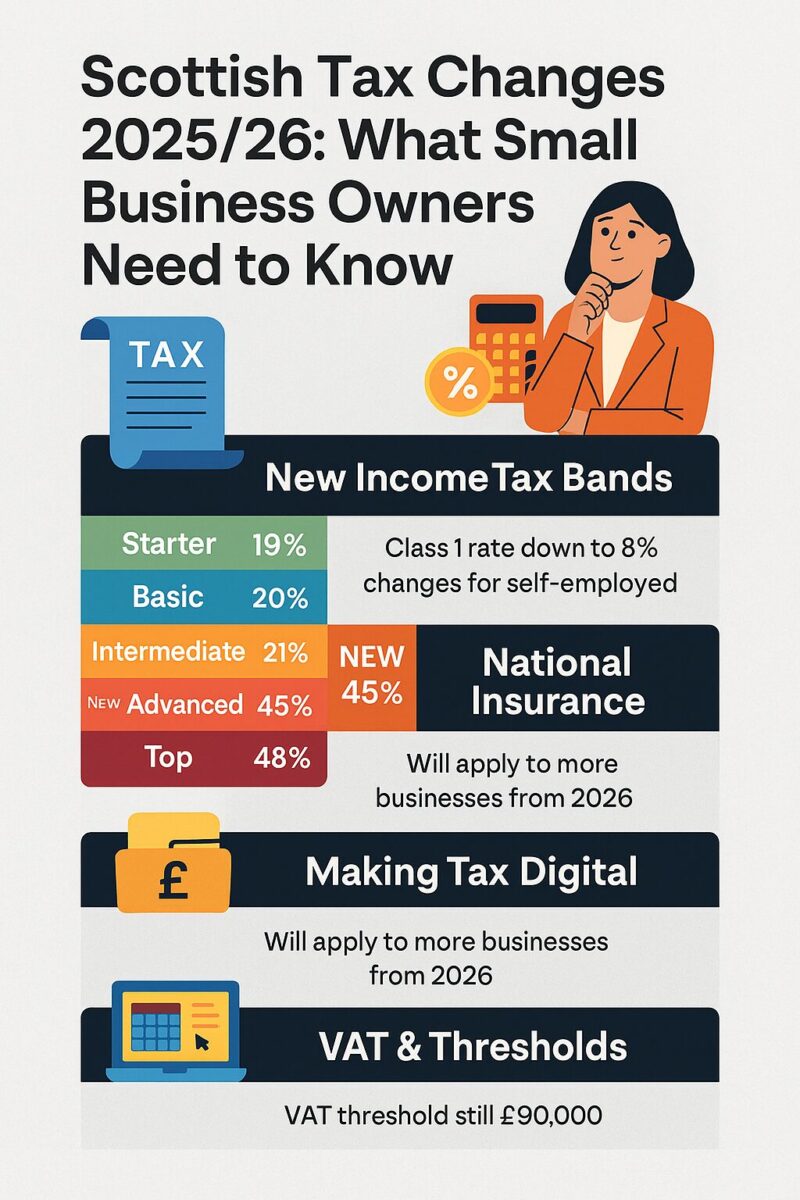
As a small business owner in Scotland, staying on top of tax updates is essential, not just for
compliance, but for planning ahead and keeping your business financially healthy.
The 2025/26 tax year introduces a number of important changes, especially for sole traders,
company directors, and small limited companies. In this post, we’ll break down what’s
changing and how you can prepare.
Note: Always seek tailored advice from an accountant or tax adviser, especially if your
Circumstances are more complex.
1. New Scottish Income Tax Bands for 2025/26
The Scottish Government has adjusted tax bands and rates again this year. Here's a simplified
breakdown for earned income (e.g. salary, self-employed profits):
Band Rate Income Range
Starter 19% £12,571 – £14,876
Basic 20% £14,877 – £26,561
Intermediate 21% £26,562 – £43,662
Higher 42% £43,663 – £75,000
Advanced (new) 45% £75,001 – £125,140
Top 48% £125,141+
If you’re a sole trader, your profits will be taxed according to these bands (after your
personal allowance).
2. What If You’re a Company Director?
If you’re the director of a limited company, you may pay yourself through a mix of salary and
dividends. It’s more tax-efficient, but you’ll still need to be mindful of:
- PAYE thresholds for salaries
- Dividend tax rates, which apply UK-wide
- Corporation Tax, which remains at 25% for profits above £50,000 (though smaller
Companies benefit from marginal relief.)
It’s wise to reassess your salary/dividend mix annually based on the latest tax bands.
3. National Insurance Update
For employee earnings, National Insurance (NI) has been reduced in the UK from previous
years:
- Class 1 employee rate is now 8% (for earnings above £12,570)
- Class 2 (self-employed flat rate) is being scrapped from April 2025
- Class 4 (self-employed profits) is dropping to 6%
4. Making Tax Digital (MTD) for Income Tax
From April 2026, MTD for Income Tax will become mandatory for self-employed
individuals and landlords earning over £50,000, with the threshold dropping to £30,000 in
2027. While not a 2025 change, it’s essential to start preparing now.
Using cloud accounting software like Xero, FreeAgent, or QuickBooks can make this
transition smoother.
5. VAT & Thresholds
The VAT registration threshold remains at £90,000 for 2025/26. If your annual turnover
exceeds this, you must register for VAT. Staying just below this limit? Keep a close eye on
monthly turnover to avoid a surprise registration.
6. What You Can Do Now
- Speak to your accountant about tax planning
- Review your salary/dividend mix (if a director)
- Move to cloud-based bookkeeping tools
- Track your earnings against thresholds
- Budget for changes to income and NI
How Clyde Offices Can Help
Our virtual assistant service can take care of admin, invoicing, and email follow-ups—so
you can focus on running your business. Our telephone answering service ensures you never
miss calls from clients or HMRC. And with a virtual business address, you’ll always have a
professional front, even from home.